

Story Playbooks
March 25, 2026
Story Playbook: The Airbnb pitch deck
Airbnb’s early deck won because it walked investors through a clear story—travel feels broken, there is a human fix, the market is huge, and the model is simple. Steal the same arc for launches, budget asks, and keynotes.
Why it works
- Pain first. People lean in when you name a cost or annoyance they already know—before you show the product.
- One hero idea per act. Problem, solution, market, model—each block answers a single worry. No pile-up of bullets.
- Proof without jargon. Simple numbers (“how big could this be?”) beat clever adjectives every time.
- A story they can repeat. After your talk, someone in the room should be able to say: “So it’s basically…” That is your test.

Start where your audience already feels friction—travel, budget, or “the old way.”

Flip to the human fix: real places, real hosts, a warmer option—not just a feature list.

Show who wins together: guests, hosts, and your team aligned on one simple transaction.

Map your beats before you open the slide tool: one idea per section, no detours.
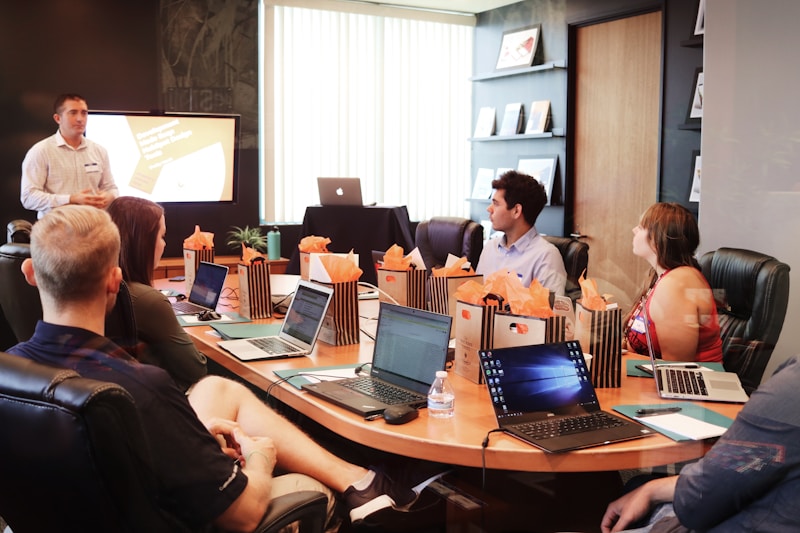
Land the arc out loud: they should retell your story in one sentence after you leave.
Most demo mistakes are predictable. Run the checklist before your next customer call.
Generate my checklistTalk track you can read aloud
Roughly two minutes. Pause after each paragraph; let the room nod before you move on.
When you plan a trip, price matters—but so does how you feel. Hotels are fine for some nights, yet they can feel rigid and pricey, especially when cities are busy. Many travelers would rather stay somewhere that feels like a real home, if only they could find it without risk or guesswork.
Our answer is simple: a trusted marketplace where locals list space and travelers book with clarity. Hosts earn income from rooms that would sit empty; guests get more choice and often a better fit for their budget. We are not inventing travel—we are removing the awkward middle layer between people who have space and people who need it.
The market is enormous because travel is global and recurring. The model is straightforward: we earn when a stay happens, so we only win when both sides are happy enough to come back.
If you remember one line: we make real homes bookable at scale, with trust and simple economics on both sides. That is the story we are building—now let me show you how we prove it week by week.
How to use this in your presentation
- Steal the four beats: pain → your fix → size of the prize → how you earn or sustain it. Rename them for your audience if you need to.
- Write each beat as one sentence before you touch slides. If a slide does not support that sentence, cut it or move it to the appendix.
- Open with a scene, not a logo. One relatable moment beats ten company facts in the first sixty seconds.
- End with a repeatable line—the “So it’s basically…” test—then invite questions on proof, not on what you meant.
For demos and live walkthroughs, the same rhythm maps cleanly to Tell–Show–Tell: name the pain, show the product moment, recap the outcome in plain language.
More Story Playbooks
If you want a structured way to apply this, use our Demo Checklist Generator. For line-by-line phrasing, try the Talk Track Builder.
Your demo isn’t converting.Get a Demo Audit.
We’ll review your live demo or product video and show you exactly what’s losing your audience — and how to fix it.
Built for real demos, not generic advice.
Pinpoint the problems
We find the exact moments where your demo loses momentum.
Get specific fixes
Clear, practical recommendations you can apply right away.
Drive more yes
A better demo experience that leads to more conversions.
Tags
Want to run better demos?
Get practical frameworks and tools used by presales teams.
Get the ChecklistContinue learning:
Related Articles
Story Playbooks • March 23, 2026
Story Playbook: Apple’s iPod introduction
When Apple introduced the iPod, the talk inflated the old world of bulky music, then landed one line everyone repeated: a thousand songs in your pocket. Borrow contrast, pacing, and a killer promise.
Story Playbooks • March 24, 2026
Story Playbook: Samsung’s Safety Truck
Samsung’s Safety Truck concept used a live feed on the rear of a truck so drivers could see past it before overtaking. The story worked because it opened with fear and a blind spot—not with specs.
Presales Career • May 23, 2026
Sales Engineer Salary
What sales engineers earn in 2026—US, Australia, and New Zealand bands, base/OTE splits, super/KiwiSaver, AE comparison, and how to read presales vs industrial titles.