

Demo Strategy
March 18, 2026
How to Structure a Presentation That Keeps Attention
A simple, practical structure to keep any presentation clear, engaging, and easy to follow.
Most presentations don’t fail because of bad content.
They fail because people get lost.
Not physically. Mentally.
Somewhere between slide 4 and slide 12, the audience stops tracking:
- where this is going
- why it matters
- what they’re supposed to take away
And once that happens, it’s very hard to get them back.
The fix isn’t more slides.
It’s better structure.

The simple structure most people miss
Good presentations follow a clear path.
Not a complicated one.
Just this:
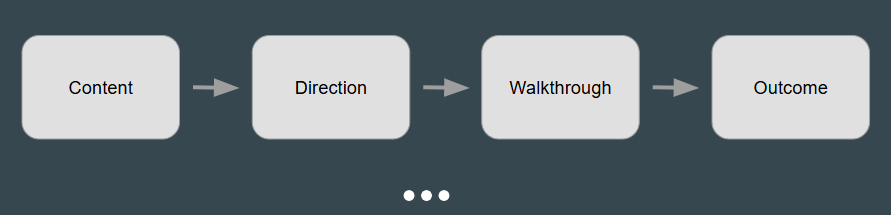
- Context
- Direction
- Walkthrough
- Outcome
That’s it.
If you get this right, attention becomes much easier to hold.
Visual: The presentation flow
Step 1 — Start with context
Before anything else, answer:
What is this about, and why should I care?
This is where you frame:
- the problem
- the situation
- the tension
Without context, everything that follows feels random.
Step 2 — Set the direction
Tell people where you’re taking them.
Not in corporate language.
Just clearly.
Example:
I’ll walk through the current challenge, then show the approach, and finish with what this means going forward.
Now the audience has a map.
And people pay more attention when they know the path.
Most demo mistakes are predictable. Run the checklist before your next customer call.
Generate my checklistStep 3 — Walk through the core idea
This is the main body.
Where most people go wrong:
- too many ideas
- too many slides
- no clear thread
Instead:
- focus on one main idea at a time
- connect each part back to the context
- keep the flow tight
If you’re presenting software, this is exactly where demos fall apart.
If that’s your world, read How to Structure a Presales Demo (That Actually Makes Sense)
Step 4 — Show the outcome
Don’t just stop.
Land the point.
Answer:
- what changed?
- what’s better now?
- what should the audience take away?
If you skip this, the presentation feels unfinished.
Why this works
Because it matches how people think.
They want to know:
- what’s going on
- where this is going
- what they’re seeing
- why it matters
When your structure aligns with that, attention becomes natural.
Common mistake: jumping straight into content
A lot of presentations start like this:
Let me walk you through this…
No context. No direction.
Just content.
That’s how you lose people early.
If this sounds familiar, you’ll probably recognise a few more issues here: Common Demo Mistakes That Kill Trust
Keep it simple
You don’t need a complex framework.
You don’t need 40 slides.
You need:
- a clear start
- a clear path
- a clear end
That’s what keeps people with you.
Final thought
Attention isn’t about being entertaining.
It’s about being clear.
When people understand where they are and where you’re taking them, they stay engaged.
Continue learning
If you want to go deeper:
- How to Structure a Presales Demo (That Actually Makes Sense)
- How to Avoid Feature Dumping in Software Demos
Want to run better demos?
Get practical frameworks and tools used by presales teams.
👉 Get the Checklist
Your demo isn’t converting.Get a Demo Audit.
We’ll review your live demo or product video and show you exactly what’s losing your audience — and how to fix it.
Built for real demos, not generic advice.
Pinpoint the problems
We find the exact moments where your demo loses momentum.
Get specific fixes
Clear, practical recommendations you can apply right away.
Drive more yes
A better demo experience that leads to more conversions.
Tags
Want to run better demos?
Get practical frameworks and tools used by presales teams.
Get the ChecklistContinue learning:
Related Articles
Demo Strategy • March 20, 2026
Demo Delivery Techniques
The mechanics of how you present: voice, pacing, screen hygiene, and handling interruptions so your demo lands.
Demo Strategy • March 20, 2026
How to Tell a Story in a Demo
A practical guide for sales engineers and presales teams who want to turn feature tours into narratives that stick.
Demo Strategy • May 20, 2026
Asking for the Sale After a Demo
Great demos but zero sales? First-person lessons on change resistance, wrong personas, earning next steps—not applause—and asking for the sale without ghosting.