

Demo Strategy
March 20, 2026
How to Demo to Technical Audience
Practical tactics for demoing software to engineers, architects, and technical evaluators who want proof, not polish.
Business stakeholders nod. Technical stakeholders probe. If you demo to engineers and architects the same way you demo to executives, you lose credibility fast. How to demo to technical audience is a different skill: they want depth, proof, and honesty. Flash and fluff backfire.
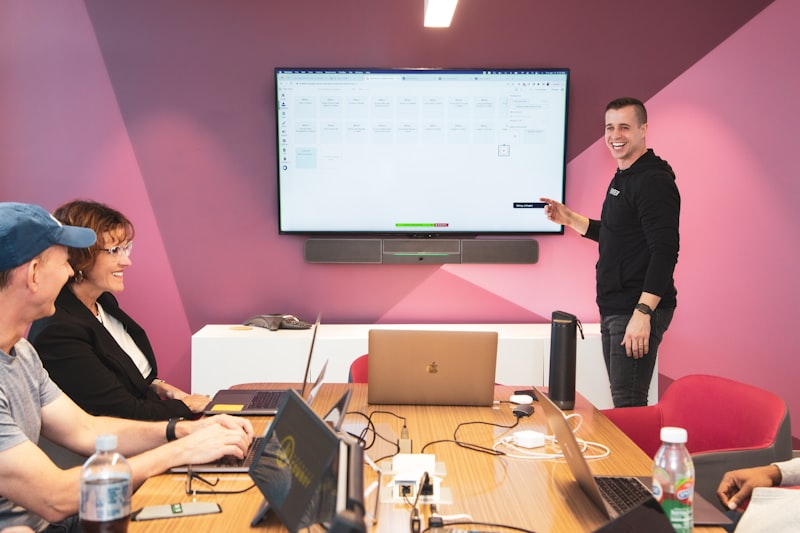
What demoing to technical audience really means
Technical audiences evaluate whether your product will work in their environment. They care about architecture, integrations, security, performance, and edge cases. They will dig. They will question assumptions. Your job is to show the substance, not hide it.
In real demos, technical buyers decide whether the deal moves to procurement or dies in evaluation. A demo that feels shallow makes them assume the worst. A demo that shows real capability builds trust.
Step-by-step: how to demo to technical audience
1. Lead with architecture, not marketing
Open with a high-level view: how the system works, what integrates where, and how data flows. Technical buyers need a mental model before they can absorb features. Skip the company story. Go straight to the technical story.
2. Show live over slides
Slides feel like a pitch. A live product feels like proof. Use the real product, with realistic data. If something is not built yet, say so. Do not fake it. Technical audiences spot gaps quickly.
3. Go deep on one or two workflows
Choose the workflows that matter most for their evaluation. Show the full path: configuration, execution, and results. Be ready to go one level deeper than you planned. Have API docs, architecture diagrams, or a sandbox ready if they want to dig.
4. Invite technical questions during the flow
Do not save all questions for the end. Technical buyers think in real time. After each major section, ask: "What would you want to see next?" or "Any questions on how this works under the hood?" Let them steer within reason.
5. Acknowledge limitations
Most demo mistakes are predictable. Run the checklist before your next customer call.
Generate my checklistWhen they ask about something you do not support, say so. "We do not do that today. Here is the workaround / roadmap / alternative." Deflection erodes trust. Honesty builds it.
6. Provide proof they can verify
Reference documentation, customer case studies with technical details, or a trial environment they can use. Give them something to validate on their own. Technical buyers trust what they can test.
Get better at demos
Practical ideas, teardown lessons, and tools for people who present software.
Get the ChecklistReal-world example
You are demoing a data pipeline platform to a data engineering lead and a solutions architect. They care about scalability, observability, and how it fits their stack.
Wrong approach: Start with a slick overview deck. Show a polished product tour. Avoid deep questions. "We can follow up on that."
Right approach: Open with "Here is how data flows: ingestion, transformation, orchestration. We will walk through each layer and show how you would monitor and debug." Use the real product. Show logs, metrics, and error handling. When they ask about a specific database, say "We support Postgres and Snowflake today. MySQL is on the roadmap for Q3. Here is how the connector works for what you have." End with "We can spin up a trial environment with your credentials. How do you want to run the evaluation?"
Common mistakes to avoid
- Using marketing language instead of technical terms
- Hiding limitations or deflecting when they ask hard questions
- Showing only the happy path without error handling or edge cases
- Rushing through technical sections to stay on schedule
- Failing to have documentation or a trial ready for follow-up
- Talking over their heads or, worse, talking down to them
Pro tips (the secret sauce)
Learn their stack before the call. Know what databases, clouds, and tools they use. Reference them by name. "Given you are on AWS and use Kafka, here is how this would fit."
Bring a technical counterpart if you can. A solutions engineer or architect can handle deep dives while you keep the flow. Two voices beat one when the audience is technical.
Use their vocabulary. If they say "ETL," you say "ETL." If they say "idempotent," you say "idempotent." Mirroring builds rapport.
Prepare a technical appendix. Have a one-pager or doc with architecture, security, compliance, and integration details. Send it before or after. It shows you take their evaluation seriously.
Do not oversell. Technical audiences respect "we do not support that" more than "we can do anything." Under-promise and over-deliver.
Learn more and apply this
Demoing to technical audiences requires a different playbook than executive demos. For timing guidance, read How Long Should a Demo Be. When things go wrong, see How to Recover from Demo Mistakes.
If you want a structured way to apply this, use our Demo Checklist Generator.
Your demo isn’t converting.Get a Demo Audit.
We’ll review your live demo or product video and show you exactly what’s losing your audience — and how to fix it.
Built for real demos, not generic advice.
Pinpoint the problems
We find the exact moments where your demo loses momentum.
Get specific fixes
Clear, practical recommendations you can apply right away.
Drive more yes
A better demo experience that leads to more conversions.
Tags
Want to run better demos?
Get practical frameworks and tools used by presales teams.
Get the ChecklistContinue learning:
Related Articles
Demo Strategy • March 20, 2026
Demo Delivery Techniques
The mechanics of how you present: voice, pacing, screen hygiene, and handling interruptions so your demo lands.
Demo Strategy • March 20, 2026
How Long Should a Demo Be
How long a demo should run—and how to budget time inside your demo structure so the walkthrough, value, and close all get air.
Demo Strategy • March 20, 2026
How to Be Confident in Demos
Real confidence in demos doesn’t come from personality. It comes from exposure, recovery, and knowing what to do when things go wrong.