

Presales Career
March 31, 2026
How to Run Your First Demo Without Freezing
Practical first demo tips for presales teams: how to stay in control when nerves spike, recover when you blank, and present your demo clearly under pressure.
You start the demo.
Your voice sounds slightly off.
You click faster than usual.
You are not in control anymore.
A director asks a question you did not expect.
Your brain does that annoying thing where ten thoughts arrive at once and none of them are useful.
Do I answer now? Skip? Go back? Why am I talking this fast?
I have seen this exact moment a hundred times.
And here is the secret reveal:
People think freezing is about nerves.
Most of the time, it is about lack of control.
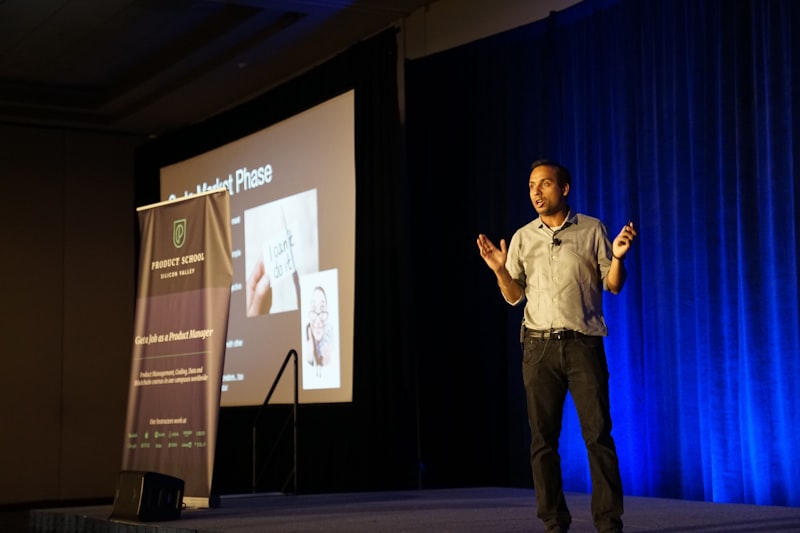
Why people freeze (cognitive overload)
In a live demo, your brain is juggling too many tabs:
- what to click next
- who is in the room
- whether your data still matches your story
- what that one stakeholder just asked
That stack is heavy.
When it gets too heavy, your system does what any system does under load: it stutters.
Freezing is not weakness.
It is overload.
Like trying to drive, text, and read road signs at the same time.
You are not “bad at demos.” You are over capacity.
The 3 anchors that stop the spiral
When I feel a freeze coming, I use three anchors:
-
Where I am
Name the current step out loud: “We are in the approval workflow.” -
Where I am going
Set the next move: “Next I will show how this escalates to finance.” -
What matters now
Filter everything through buyer value: “The key point here is control without extra admin work.”
These anchors are like guardrails on a mountain road.
You can still drive fast.
You just stop flying off the edge.
Simple structure to follow (when your brain is noisy)
For a first demo, keep structure almost boring:
Context -> Workflow -> Proof -> Next Step
- Context: one sentence on the buyer problem
- Workflow: one end-to-end path
- Proof: one metric, one output, or one real result
- Next Step: what to validate after the call
That is it.
Most demo mistakes are predictable. Run the checklist before your next customer call.
Generate my checklistDo not try to “show everything.”
That is how control disappears.
If you are wondering how to present demo content clearly, this is the answer:
one path, one promise, one proof.
What to do when you blank
You will blank at some point. Everyone does.
Scenario 1:
You forget what screen comes next.
Do this:
Let me quickly re-anchor to your process, then I will show the exact step.
Take one breath.
Go back to your last stable screen.
Continue from the anchor, not from panic.
Scenario 2:
You get a hard question mid-flow and your mind goes empty.
Do this:
Great question. I want to answer that precisely. Let me finish this workflow in 60 seconds, then we will hit it directly.
That buys you time and keeps trust.
Silence for two seconds feels long to you, not to them.
Use it.
Small tricks that actually work
These are unglamorous, but they work:
- Slow your first click. Fast clicks signal panic before words do.
- Put a sticky note near your camera: “Slow is smooth.”
- Use checkpoint lines every 2-3 minutes: “So far we covered X, now we move to Y.”
- Keep one backup phrase ready for any blank moment.
- Practice interruptions, not just flow. Rehearse three tough questions before the call.
My favorite one: lower your speaking speed by 10%.
It feels weird in your head.
It sounds confident to everyone else.
First demo reality check
A nervous demo is normal.
A perfect first demo is not.
Your goal is not to look fearless.
Your goal is to stay useful under pressure.
That is a much better target, and it is trainable.
For practical first demo tips, focus less on “being calm” and more on building control points.
Calm is usually the side effect, not the starting point.
If you freeze, it does not mean you are not ready.
It usually means you are trying to carry too much at once.
Reduce the load. Use anchors. Keep one clear path.
Control first. Confidence follows.
If you want a structured way to apply this, use our Demo Checklist Generator.
Your demo isn’t converting.Get a Demo Audit.
We’ll review your live demo or product video and show you exactly what’s losing your audience — and how to fix it.
Built for real demos, not generic advice.
Pinpoint the problems
We find the exact moments where your demo loses momentum.
Get specific fixes
Clear, practical recommendations you can apply right away.
Drive more yes
A better demo experience that leads to more conversions.
Tags
Want to run better demos?
Get practical frameworks and tools used by presales teams.
Get the ChecklistContinue learning:
Related Articles
Presales Career • March 31, 2026
How to Break into Presales (From Any Background)
A practical guide on how to get into presales, understand the presales career path, and become a presales engineer without following one perfect route.
Presales Career • March 31, 2026
Your First 30 Days in Presales (What Actually Matters)
A practical guide to presales onboarding: what to focus on, what to ignore, and how to survive your first live demos in a new presales role.
Presales Career • March 31, 2026
The Presales Playbook (Career Edition)
How to break into presales, survive your first demos, and build a career that stands out - through real moments that actually happen.